

Table of Contents:
- Why Look for a K2 Alternative?
- The Nintex K2 Benchmark
- Category 1: The Enterprise DPA Powerhouses
- Category 2: The Microsoft Ecosystem Incumbent
- Category 3: The Agile, User-Friendly Challengers
- Category 4: The Application Platform Leaders
- Comparing the K2 Alternatives
- How to Choose the Right K2 Alternative for You
- It’s About the Problem, Not Just the Platform
Last Updated on September 22, 2025
Is your current workflow automation tool holding you back?
In this guide, let’s talk about the best K2 alternatives that can help you streamline your business processes.
Let’s get started.
Why Look for a K2 Alternative?
Following its acquisition by Nintex, many K2 users are re-evaluating their workflow automation strategy.
The market is now filled with specialized tools, and the platform that was once the best fit might no longer match your specific needs.
Many users look for an alternative to address common challenges with K2, including:
- High cost: Enterprise pricing can be prohibitive
- Steep learning curve: Requires specialized, expensive, and hard-to-find developers
- Mismatched use case: Better platforms exist for empowering business users or building new applications
Choosing the right tool requires understanding both K2’s limitations and your own evolving business goals.
With that, let’s categorize top K2 alternatives to help you choose the right workflow automation tool for your business.
Sign up for exclusive updates, tips, and strategies
The Nintex K2 Benchmark
To choose a good alternative, you first need a clear baseline.
K2 was favored by enterprises for its ability to handle complex business processes that simpler tools could not.
Its main strengths include:
- Handles complexity: Automates sophisticated and data-heavy workflows
- Microsoft integration: Connects deeply with SharePoint, SQL server, and more
- Component reusability: Speeds up development with reusable data connections
- On-premises control: Offers full control over data and infrastructure
Though powerful, the platform has clear trade-offs, leading many to seek alternatives (these challenges are often the flip side of its strengths).
Common weaknesses include:
- High cost: K2 is expensive, making it unsuitable for many small to medium-sized businesses.
- Steep learning curve: K2 requires strong technical skills, and experienced developers are hard to find.
- Complex deployment: The on-premises version is difficult to install and upgrade, often needing vendor assistance.
This complexity contributes to a higher total cost of ownership that goes beyond just licensing fees.
For businesses seeking more agility and lower overhead, this can be a significant reason to look for a cloud-native alternative.
Now that we have our benchmark, let’s examine the alternatives, which we’ve grouped into four distinct categories.
Category 1: The Enterprise DPA Powerhouses
If your goal is to match or exceed K2’s ability to handle extreme process complexity, these platforms are your top contenders.
Appian
Appian offers a unified low-code platform for building entire enterprise applications, not just automating workflows.
It’s designed for both professional developers and business-savvy users to collaborate on complex projects.
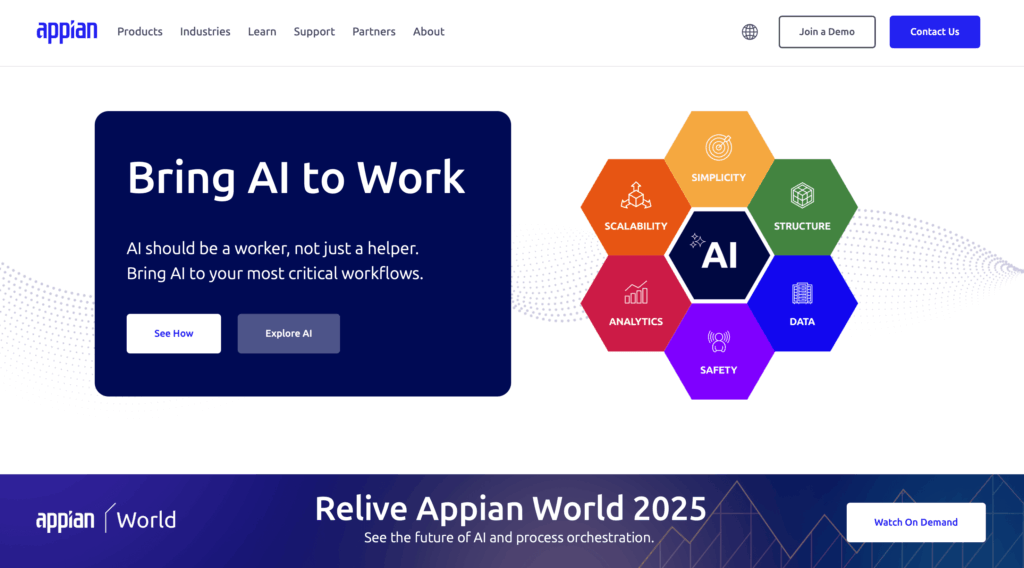
Its core strengths include:
- Unified low-code platform
- “Data Fabric” for system integration
- Rapid application development
- Collaborative environment
Its key feature is the “Data Fabric,” which creates a virtual data layer to connect multiple systems without forcing you to move your data.
It’s ideal for quickly building data-rich applications like customer portals or supply chain trackers with complex process logic.
This approach avoids costly data migrations and accelerates time-to-value for new enterprise solutions.
Pegasystems (Pega)
Pega takes a different approach centered on “case management,” making it excellent at managing unpredictable, long-running business processes.
It’s a leader in highly regulated industries like banking, healthcare, and insurance, where rules and compliance are critical.
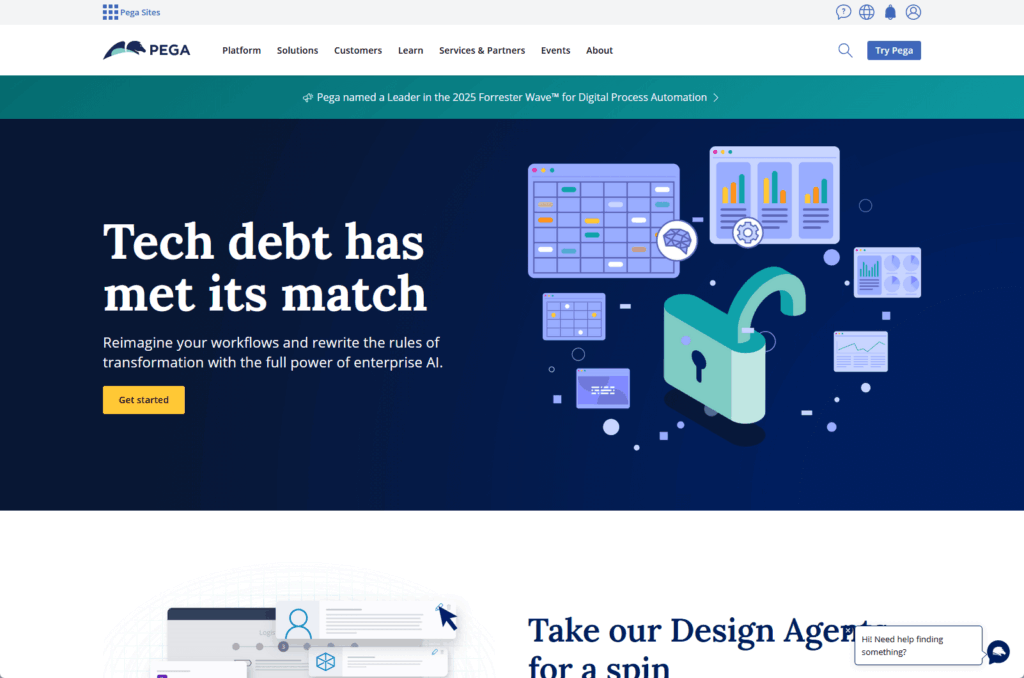
Its core strengths include:
- Case management paradigm
- AI-powered decisioning engine
- Suited for unpredictable processes
- Strong in regulated industries
Pega handles “cases” (e.g., insurance claims) dynamically, adapting steps as new information arises, unlike linear processes.
It uses a powerful AI and decisioning engine to guide these cases to the best resolution.
This makes it the ideal choice for complex scenarios that require more than a simple, predefined workflow.
Category 2: The Microsoft Ecosystem Incumbent
For the millions of organizations already running on Microsoft 365, this platform is the default choice.
It competes not just on features, but on its seamless integration into the world’s most common business software suite.
Microsoft Power Automate
Power Automate is Microsoft’s answer to workflow automation, positioned as the connective tissue for the entire Microsoft cloud.
For many businesses, a functional version is already included in their existing licenses, removing the initial cost barrier.
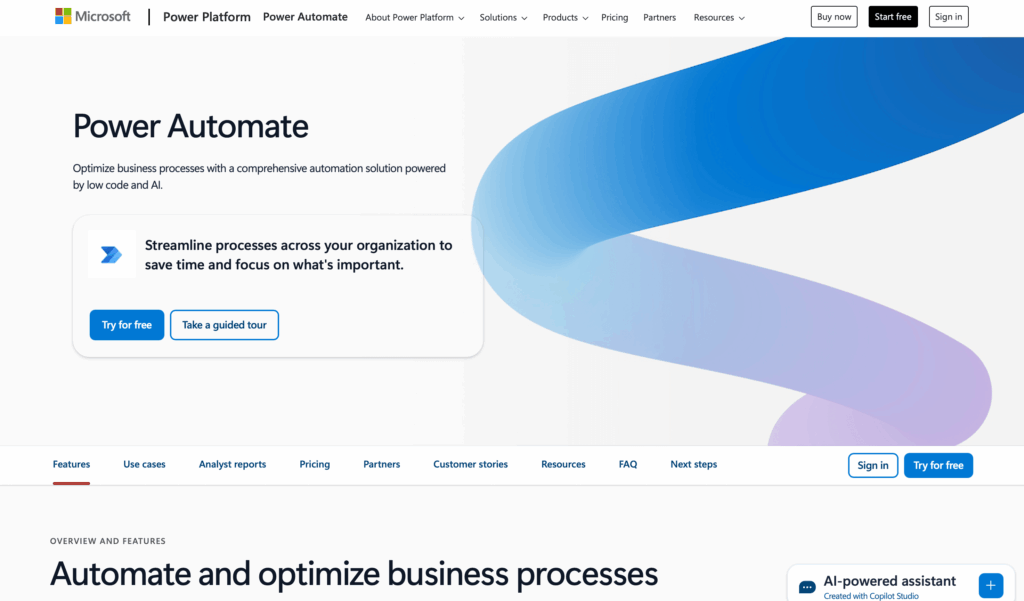
Its core strengths include:
- Native Microsoft 365 integration
- Vast library of cloud connectors
- Cost-effective for existing users
- Strong for routine task automation
It excels at connecting cloud services and automating routine tasks, like saving an email attachment to SharePoint and sending a notification in Teams.
While user-friendly and highly accessible, K2 remains superior for managing highly complex logic in a single workflow.
Power Automate is the path of least resistance for companies deeply embedded in the Microsoft ecosystem.
Category 3: The Agile, User-Friendly Challengers
This category of tools competes on speed and accessibility.
They’re designed to empower business departments to solve their own automation problems quickly, without waiting for IT.
Kissflow
Kissflow brands itself as an all-in-one work platform where teams can manage processes, projects, and cases from a single place.
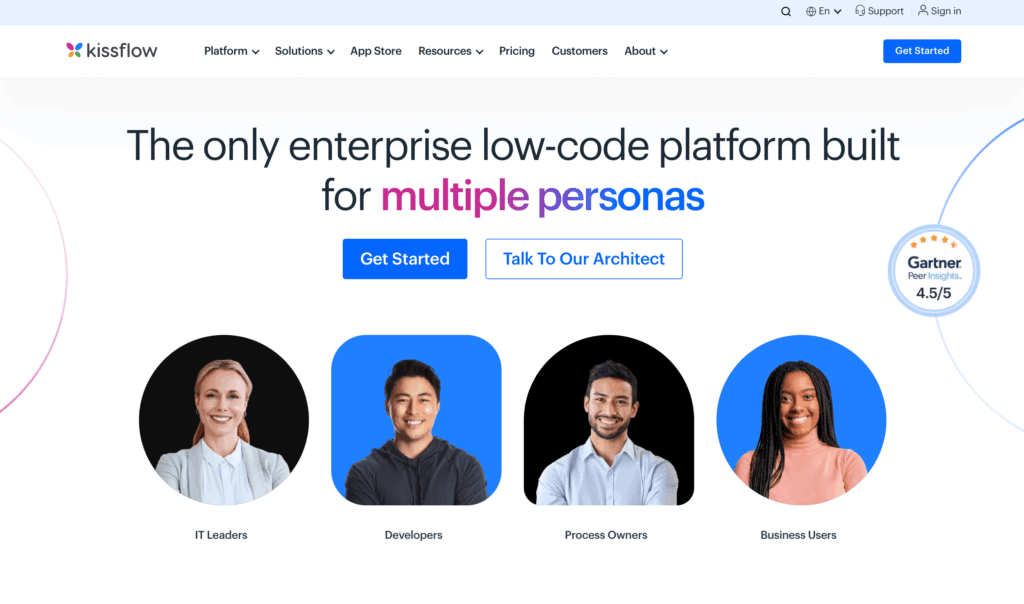
It uses a simple, intuitive interface that allows non-technical users to design their own workflows, and it comes with the following core strengths:
- All-in-one work platform
- Simple, intuitive interface
- Empowers non-technical users
- Ideal for departmental automation
This makes it a good fit for individual departments, like HR or Finance, that want a tool they can manage themselves.
Common use cases include automating employee onboarding or purchase requests.
The platform’s focus is on simplicity and providing a single hub for a team’s work, reducing the need to switch between different applications.
Pipefy
Pipefy uses a highly visual, Kanban-style interface that many business users find intuitive and easy to adopt.
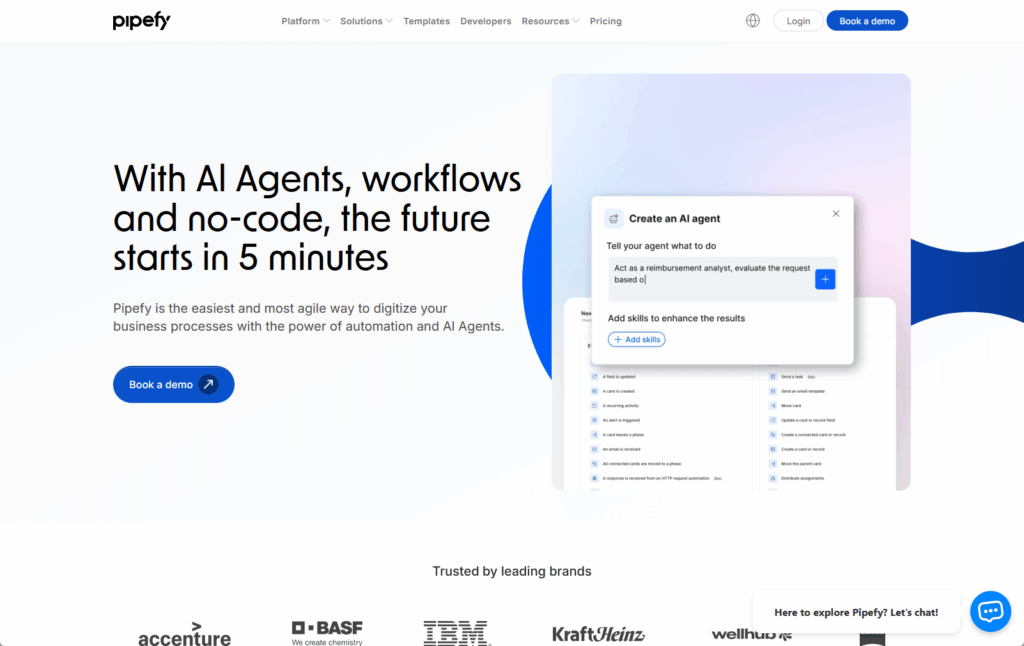
It’s aimed squarely at business teams in small to medium-sized companies, and includes the following core strengths:
- Visual, Kanban-style interface
- Extremely easy for business users
- Robust free-to-start plan
- Great for managing requests
Work items are represented as cards that move through different phases of a process, similar to project management tools like Trello.
This visual approach makes it easy for teams to see the status of requests and identify bottlenecks.
What’s nice is that its generous free plan facilitates team adoption and value demonstration before a paid commitment.
Category 4: The Application Platform Leaders
If your primary goal is a broad company initiative to modernize or build new custom applications, then workflow is just one piece of a much larger puzzle.
OutSystems
OutSystems is a high-performance low-code platform for building complex, scalable, and secure enterprise applications.
It’s designed for professional development teams who need to deliver mission-critical applications much faster than with traditional coding.
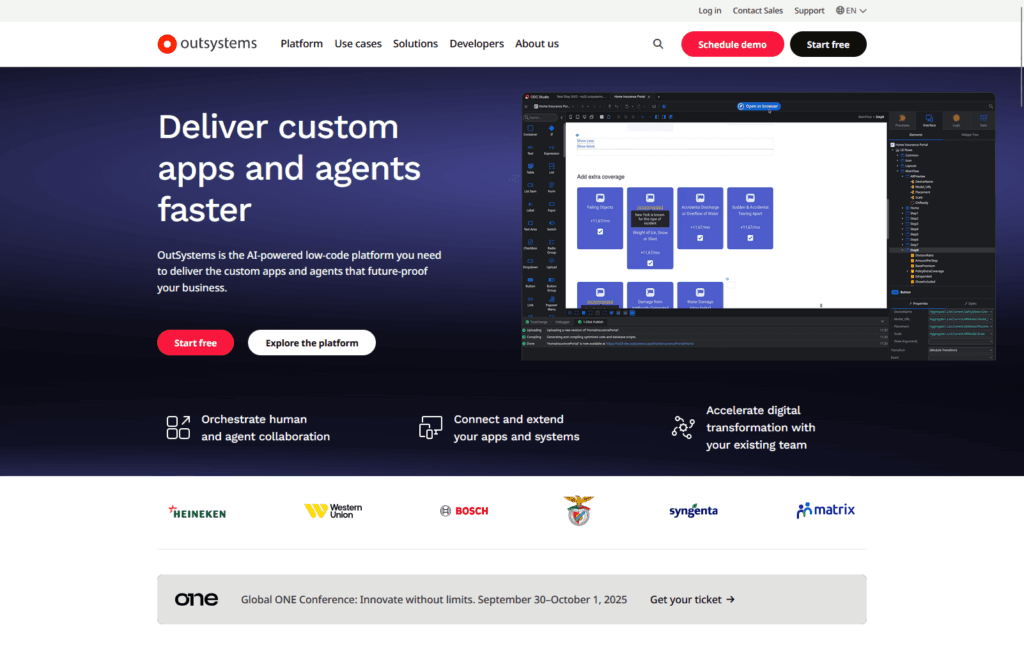
Its core strengths include:
- High-performance application building
- Focus on security and scalability
- Avoids low-code limitations
- Built for professional dev teams
Workflow automation is a core feature, but it serves the larger goal of building full-stack applications.
OutSystems is the choice when performance, security, and the ability to handle complexity without hitting a “low-code wall” are the top priorities.
It allows teams to build almost anything they can imagine, but with the speed and efficiency of a low-code model.
Mendix
Mendix, a Siemens business, is an all-in-one low-code platform that emphasizes collaboration between business users and IT.
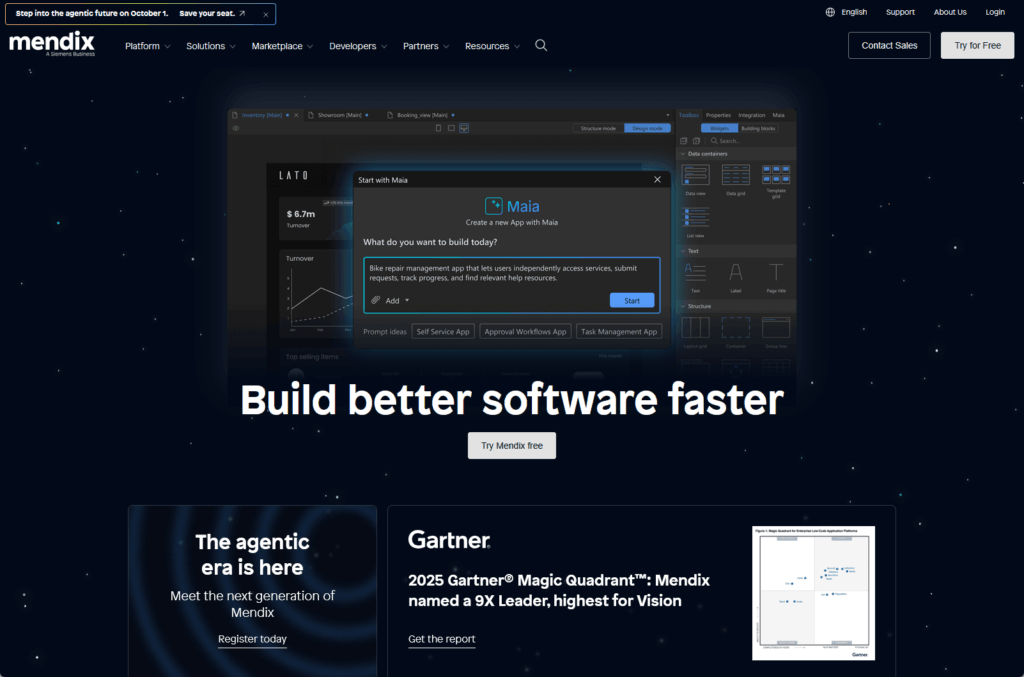
It provides a shared visual language where different teams can work together to build applications, with core strengths in:
- Business and IT collaboration
- Shared visual development environment
- Covers entire application lifecycle
- Strong for aligning business needs
This collaborative approach helps ensure that the final product meets the actual business requirements.
Like OutSystems, Mendix is used to build entire applications that have workflow logic embedded within them.
It’s ideal for large companies seeking to improve communication between business and technology teams for faster, better software delivery.
Comparing the K2 Alternatives
Here’s a quick-reference guide to help you compare the options side-by-side:
| Platform | Primary User | Typical Company Size | Process Complexity | Core Focus |
| Nintex K2 | IT Pro/Developer | Mid-Market, Large | Sophisticated, Complex | Process Orchestration |
| Appian | IT Pro/Developer | Large Enterprise | Complex, Mission-Critical | Low-Code App Development |
| Pega | Business Analyst, IT | Large Enterprise | Complex, Mission-Critical | Case Management |
| Power Automate | Citizen Developer, IT | SMB to Enterprise | Simple to Sophisticated | Ecosystem Task Automation |
| Kissflow | Business User | SMB, Mid-Market | Simple, Departmental | All-in-One Work Platform |
| Pipefy | Business User | SMB, Mid-Market | Simple, Departmental | No-Code Task Management |
| OutSystems | IT Pro/Developer | Large Enterprise | Complex, Mission-Critical | High-Performance App Dev |
| Mendix | IT & Business Users | Mid-Market, Large | Sophisticated, Complex | Collaborative App Dev |
How to Choose the Right K2 Alternative for You
The best choice depends entirely on your primary goal. Use the following scenarios to guide your decision.
If your priority is extreme complexity and on-premises control, you need an enterprise powerhouse.
This approach is for organizations that automate data-intensive workflows and require tight control over their data and infrastructure.
- Our recommendation: Appian or Pega
- Appian is the ideal choice for building new, data-rich applications from the ground up.
- Pega is the unmatched leader for managing unpredictable business “cases.”
If your priority is Microsoft integration and cost-effectiveness, the choice is clear.
This path is for organizations that run on Microsoft 365 and need to automate a wide range of tasks without a massive new investment.
- Our recommendation: Microsoft Power Automate
It’s the path of least resistance and builds on the Microsoft licenses you likely already own.
But if your priority is speed, simplicity, and empowering business users, an agile tool is your best bet.
This route is for departments like HR, Finance, or Marketing that want to automate their own work without waiting in the IT queue.
- Our recommendation: Pipefy or Kissflow
- Pipefy’s visual Kanban board is very intuitive for business teams.
- Kissflow offers a broader all-in-one platform for managing different types of work.
If your priority is strategic application modernization, you need a dedicated application platform.
This strategy is for companies where automating a workflow is part of a larger strategy to build the next generation of custom software.
- Our recommendation: OutSystems or Mendix
- OutSystems focuses on high performance for complex, mission-critical applications.
- Mendix emphasizes business-IT collaboration to deliver better software faster.
It’s About the Problem, Not Just the Platform
The workflow automation market has shifted away from a one-size-fits-all approach, meaning there’s no single “best” K2 alternative.
First, identify your core business need: complex process orchestration, team self-service, or new digital application development.
Answering that question is the key to selecting a tool that will deliver real value and drive a successful automation strategy.
Do you have questions about how to choose the right workflow automation tool? Let me know below.
For any business-related queries or concerns, contact me through the contact form. I always reply. 🙂