
Table of Contents:
Last Updated on August 10, 2025
Are you paying too much for process automation or finding your current platform too complex?
In this guide, I’ll show you the top alternatives to Nintex to save money and better fit your business needs.
Let’s get started.
The Baseline for Comparison
Nintex is a top business process automation (BPA) platform with strong workflow and document automation.
It offers solutions to manage the entire business process lifecycle, from mapping to optimization.
Nintex Core Capabilities
Nintex covers every stage of the automation process.
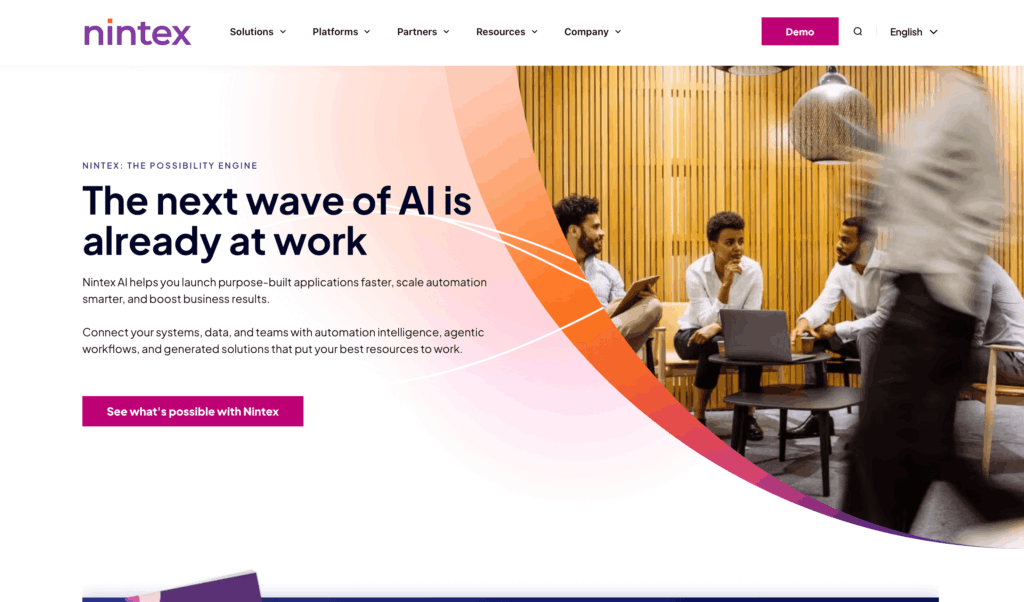
Its key components, often acquired through strategic purchases, include:
- Nintex Promapp®: For collaborative process mapping and management
- Nintex Workflow: The core engine for designing and executing automated workflows
- Nintex Forms: For creating sophisticated digital forms to capture data
- Nintex DocGen®: A best-in-class tool for automatically generating documents
- Nintex RPA: For automating repetitive desktop tasks in legacy systems
This “Swiss Army knife” approach allows it to handle a broad range of automation needs.
Its origins are deeply tied to SharePoint, making it a natural extension for those heavily invested in the Microsoft stack.
Why Businesses Seek Alternatives
The most significant factor driving customers to seek alternatives is Nintex’s pricing structure.
The platform is a major financial commitment, with complex licensing models that are often difficult to predict.
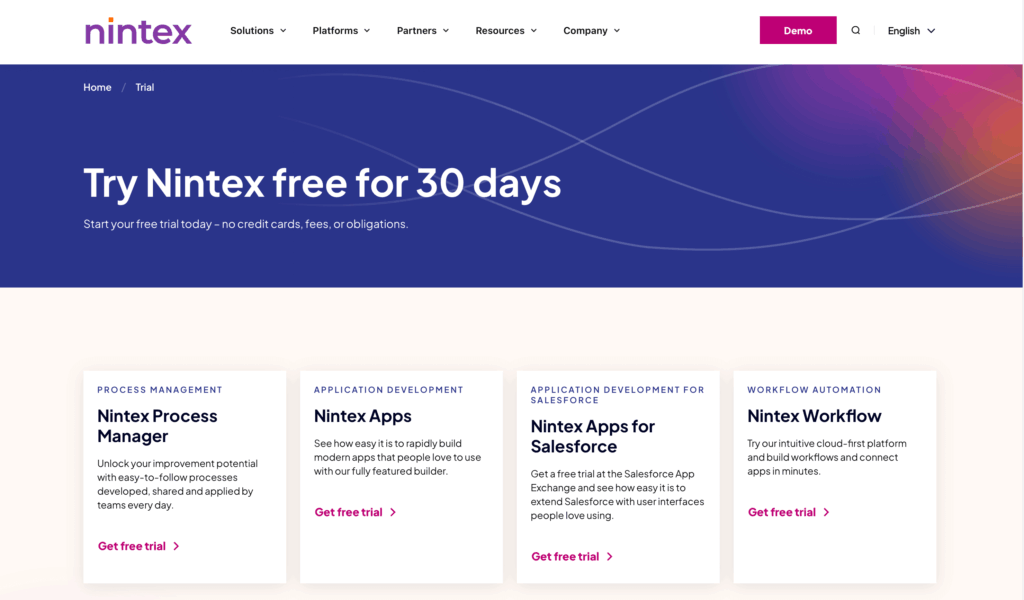
Standard plans can cost over $25,000 annually, with additional fees for exceeding workflow limits.
This high-cost structure effectively prices out many small and medium-sized businesses.
Its cost challenges large enterprises, making it the motivation for finding more cost-effective solutions.
Here’s a quick glance at Nintex’s key strengths and weaknesses:
| Strengths | Weaknesses |
| ✅ Comprehensive, all-in-one platform | ❌ Prohibitive cost & complex licensing |
| ✅ Best-in-class document generation | ❌ Steep learning curve for business users |
| ✅ Unmatched SharePoint integration | ❌ Performance issues in some cloud scenarios |
| ✅ Flexible deployment (Cloud/On-Prem) | ❌ Relies on external data storage |
Sign up for exclusive updates, tips, and strategies
Top 5 Nintex Alternatives
The automation market is filled with diverse platforms.
Here are the five leading alternatives to Nintex:
1. Microsoft Power Automate: The Integrated Ecosystem Challenger
Power Automate is Microsoft’s direct answer to the automation market and a core component of its broader Power Platform.
It’s designed to provide seamless, integrated automation for organizations invested in the Microsoft cloud.
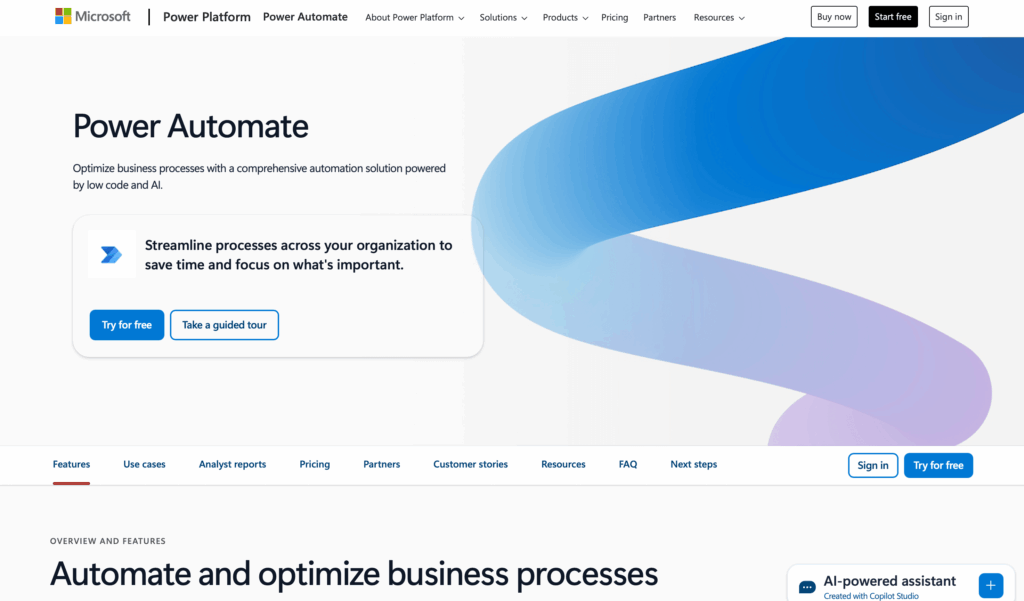
Its greatest strengths lie in its deep integration and disruptive pricing, including:
- Seamless native integration across Microsoft 365, Azure, and Dynamics 365
- A vast library of pre-built connectors to hundreds of services
- A highly accessible and low-cost licensing model
This makes it a formidable alternative to more expensive, standalone platforms.
Its key components include Cloud Flows for API-based automation and Desktop Flows for RPA.
The platform’s true power is realized when combined with Power Apps for custom interfaces and Power BI for analytics.
Power Automate is ideal for a broad range of scenarios, including:
- Automating team-level tasks by citizen developers
- Creating governed, enterprise-scale automations managed by IT
- Integrating processes across Microsoft 365, Dynamics 365, and Azure
Because of its initial inclusion in existing Microsoft 365 subscriptions, it eliminates the initial cost barrier.
This makes it the default, frictionless choice for most automation needs within a Microsoft-centric environment.
2. UiPath: The RPA-First Powerhouse
UiPath has a different angle, leading the market with its Robotic Process Automation (RPA) platform.
It’s built around the concept of a “digital workforce” — software bots that mimic human actions to automate tasks.
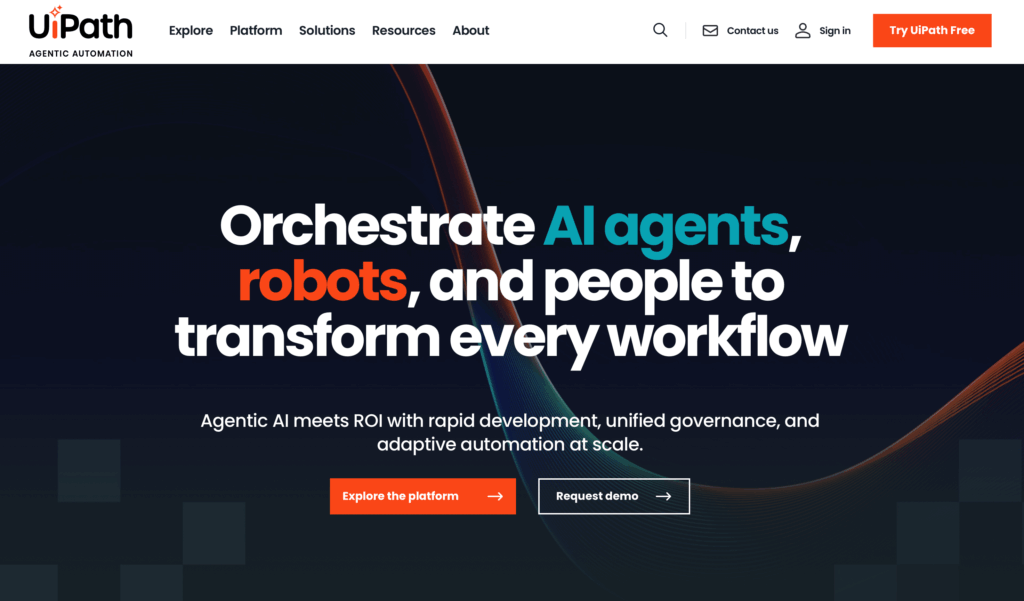
The platform’s dominance is built on several key strengths:
- Best-in-class unattended automation for large-scale, back-office processes
- Advanced AI and Intelligent Document Processing (IDP) for handling unstructured data
- Enterprise-grade scalability and governance for managing thousands of bots
UiPath has evolved beyond simple task automation into a full hyperautomation suite.
Its sophisticated governance tools, like the UiPath Orchestrator, are designed for deploying and managing a digital workforce at scale.
This makes it exceptionally effective for automating processes that involve older, legacy systems.
UiPath excels at automating high-volume, repetitive, and rules-based tasks, such as:
- Extracting data from invoices and PDFs
- Migrating data between legacy applications
- Reconciling large datasets across disconnected systems
It’s designed for system-centric tasks that are currently performed manually by human workers.
This makes it the go-to platform for building a “digital workforce” to handle back-office processes.
3. Appian: The Enterprise Low-Code Leader
Platform Overview & Strengths
Appian is an enterprise-grade platform that unifies low-code application development with powerful process automation.
It’s designed for large-scale, strategic initiatives aimed at modernizing core business operations.
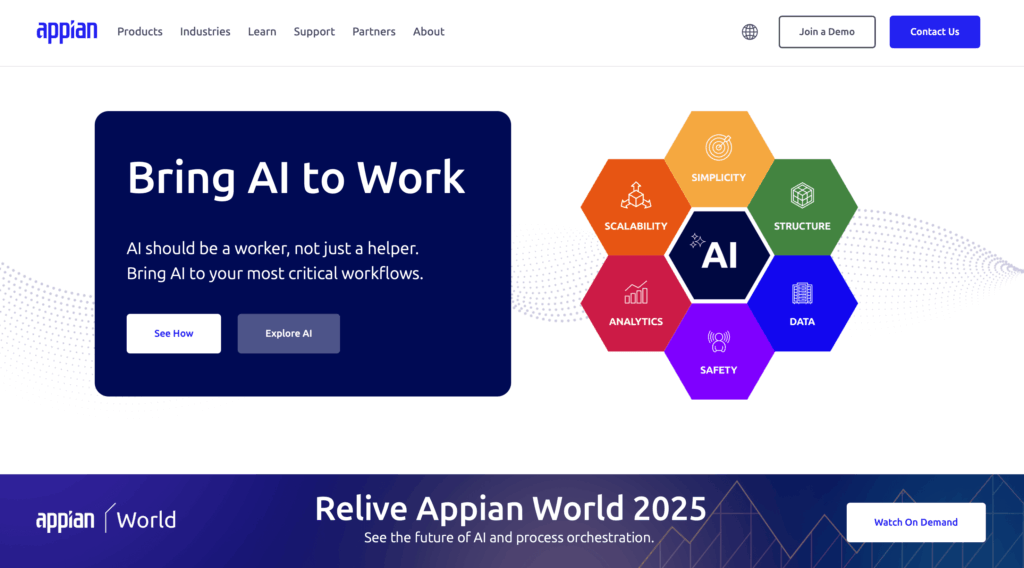
Its primary differentiators are designed for complex, mission-critical projects:
- Sophisticated case management for dynamic and unpredictable processes
- An innovative Data Fabric for real-time data orchestration without migration
- Rapid, low-code application development capabilities
Its Data Fabric is a crucial advantage for large organizations with fragmented IT landscapes.
This allows developers to build powerful and unique business applications at significant speed.
Appian is the ideal choice for complex, case-based scenarios, including:
- Insurance claims processing
- Loan origination and underwriting
- Complex customer service and onboarding requests
The platform enables developers to create powerful business applications at significant speed.
4. Pegasystems (Pega): The AI-Driven Transformation Engine
Pega offers an integrated DPA, CRM, and RPA platform for the enterprise market.
It’s designed for the world’s largest organizations undertaking strategic digital transformation.
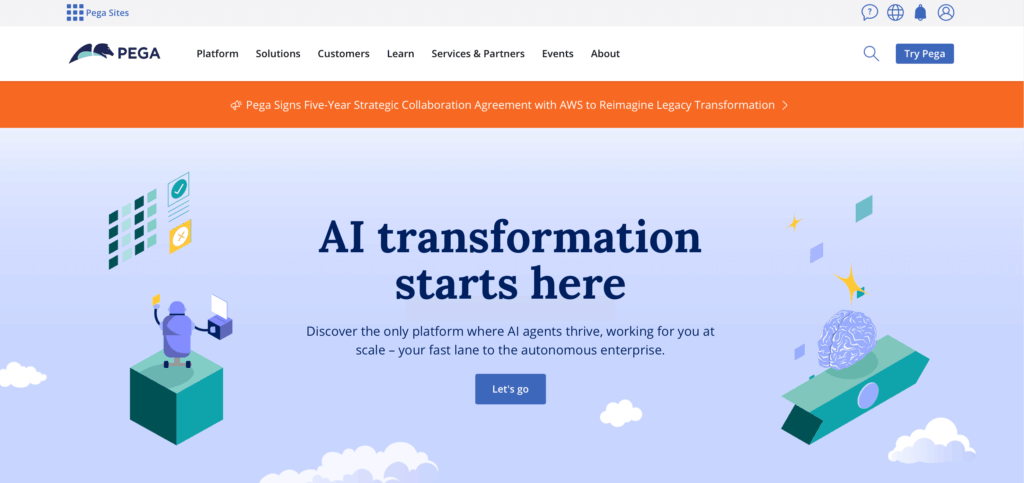
Its architecture is built for mission-critical operations, centered on:
- A powerful, AI-driven decisioning engine for real-time intelligence
- Patented “Build for Change” technology that provides business agility
- A unified platform for BPM, CRM, and customer service
Pega’s crown jewel is its “Customer Decision Hub,” which uses real-time AI to drive “next-best-action” intelligence.
This enables organizations to personalize customer interactions across all channels at a massive scale.
The platform is architected for the most demanding enterprise environments, offering robust security and scalability.
Pega is designed to re-architect mission-critical operations with AI at their core, focusing on:
- Optimizing customer engagement at a massive scale
- Driving real-time, next-best-action decisions in customer service
- Unifying complex BPM and CRM operations
Pega isn’t a tool for simple task automation but a strategic investment for transforming core business functions.
Its price and complexity reflect its focus on the highest end of the market.
5. Kissflow: The No-Code & User-Centric Option
Kissflow represents the opposite end of the spectrum from complex enterprise platforms.
It is a true no-code “Work Platform” designed to empower citizen developers with limited or no coding skills.
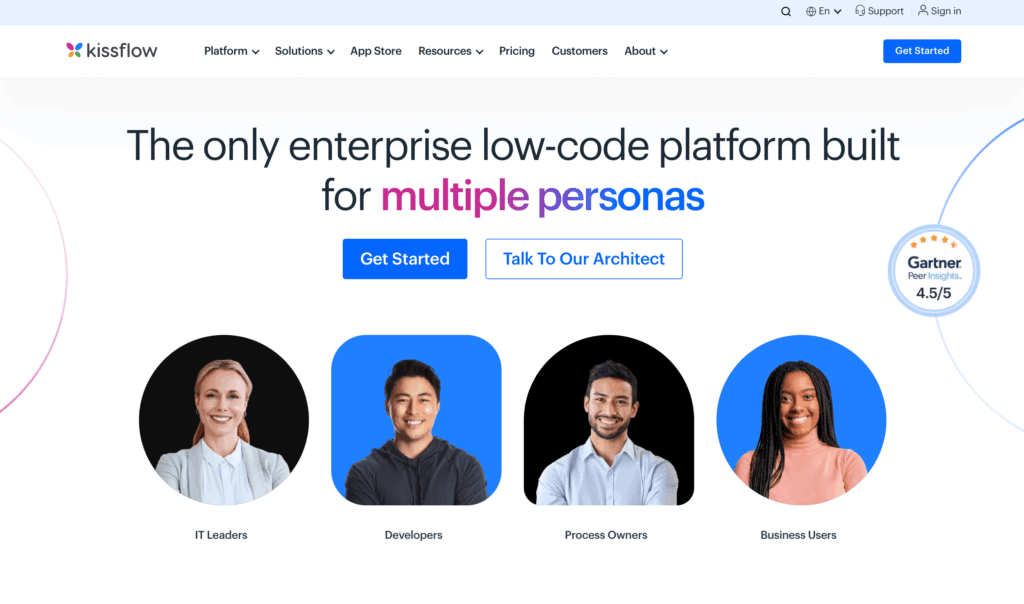
Its core philosophy is to put automation power directly into the hands of business users through:
- An intuitive and simple drag-and-drop interface
- Accessible and transparent pricing models
- Extremely rapid time-to-value for new solutions
The platform’s main goal is to remove the traditional IT bottleneck by making automation accessible to everyone.
Its greatest strength is its simplicity, enabling teams to build and launch their own solutions quickly.
This focus on the democratization of automation stands in stark contrast to more complex, IT-centric platforms.
Kissflow is built for organizations that prioritize speed and user adoption, making it perfect for:
- Empowering non-technical citizen developers
- Building simple departmental applications quickly
- Automating processes without IT dependency
The platform allows teams to build and launch their own automated processes within days or weeks.
How to Choose the Right Automation Partner
Selecting a platform goes beyond a simple feature comparison.
It requires aligning a platform’s core philosophy with your organization’s primary business drivers.
This comparison matrix might help:
| Platform | Primary Focus | Target User | Pricing Model | No-Code Friendliness |
| Nintex | Workflow Automation | IT & Ops Pros | High | Moderate |
| Power Automate | Integrated Ecosystem | Citizen & Pro Devs | Low / Bundled | Good |
| UiPath | RPA | RPA Developers | High | Moderate |
| Appian | Low-Code Apps | Pro & Low-Code Devs | High | Moderate |
| Pega | Enterprise Transformation | Pro Developers | Very High | Low |
| Kissflow | No-Code Platform | Business Users | Moderate | Excellent |
If you need more help, here’s an easy way to remember your options:
- If you’re all-in on Microsoft… your evaluation should begin and likely end with Microsoft Power Automate. Its cost advantage and seamless integration are unparalleled.
- If you need to automate legacy systems without APIs… the RPA-first architecture of UiPath makes it the market leader and strongest choice.
- If you need to build a new, complex case management application… you require a low-code platform. Appian is a leader in this space.
- If you need departmental agility and want to empower business users… the simplicity, speed, and affordability of Kissflow are ideal.
- If your process is sophisticated, document-heavy, and requires deep governance… the core strengths of Nintex make it a top-tier solution that is still hard to beat in its niche.
The Future is Integrated, Intelligent, and User-Focused
Business process automation now centers on comprehensive platforms integrating workflow, RPA, and AI, not siloed tools.
The key takeaway is that there’s no single “best” Nintex alternative exists; it all depends on context, budget, and goals.
But what’s nice is that these powerful alternatives offer businesses more choices for automation.
Do you have any questions about these alternative platforms to Nintex? Let me know below.
For any business-related queries or concerns, contact me through the contact form. I always reply. 🙂





























Hi Ryan, nicely constructed piece but I wouldnt say that Nintex was in the high price category, especially when compared to some of the others you have put in there. I work for Nintex and would be delighted to show you some of the latest Nintex developments and a bit more about pricing so you can advise customers correctly and accurately. I also think you will be mpressed when you see just what Nintex has been working on for the last few years!